
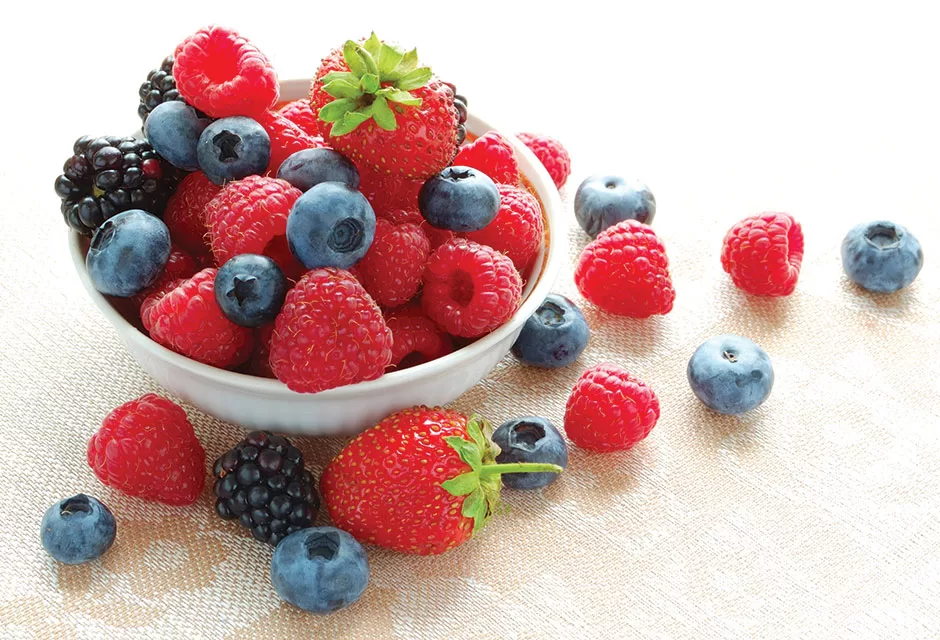
One of the best things about summer is the abundance of wonderful summer fruit. Fresh fruit at the peak of the season is readily available and very often on sale at local food markets. This article also contains some information on how to enjoy summer fruit even off season.
Here Are Some Favorites With
Information About Their Benefits.
Cherries
Cherry season comes and goes as fast as a blink of the eye. The peak season is May through July. Cherries originated in Asia and were carried to Europe by birds. English colonists brought cherries to the US in the 1600s. Cherries are grown in the Northwest United States and also in Michigan. Cherrie trees don’t produce the fruit until they are 5 years old. One cherry tree can produce 100 pounds of fruit per season.
Cherries provide iron, potassium, vitamin C and antioxidant phytochemicals. They’re also good sources of fiber and carbohydrates, so they can boost your energy while adding beneficial fiber to your diet. One cup of sweet cherries contains 97 calories, which is low enough to make this serving size a good choice for snacks.
The key health benefits for eating this fruit:
➤ Antioxidant protection
➤ Cancer-preventive compounds
➤ Reduce inflammation & your risk of gout
➤ Arthritis pain relief
➤ Reduce belly fat
➤ Lower risk of stroke
Blackberries
Blackberries, which grow on thorny bushes called brambles, are native to Europe. Blackberries are grown commercially in the U.S. They are available all year ‘round but are the best during early summer. The leading production areas of blackberries are spread across different regions of the United States. States that lead in blackberry production are Oregon, California, Texas, Arkansas, Georgia, Washington and North Carolina. This fruit belongs to the same family as raspberries.
Blackberries are loaded with vitamin C and are low in calories and sodium. They are an excellent source of fiber. Blackberries are also rich in A, E, K, and B vitamins. Minerals like copper, manganese, magnesium, potassium, pantothenic acid, pyridoxine, riboflavin, niacin, and folic acid are also found in this fruit. One cup of blackberries contains about 62 calories.
The key health benefits for eating this fruit:
➤ Improve and maintain brain function
➤ Reduce inflammation, fight infection and boost immunity
➤ May prevent and slow growth of cancer
➤ Good for the cardiovascular system
➤ Promote healthy skin
Raspberries
Raspberries were cultivated in England in the mid-16th century. The development of new varieties started in the US in the early 19th century. Raspberries are mostly grown as red and black varieties. Production occurs across much of the country, although most of it is concentrated in California, Oregon and Washington. California leads the nation in both black and red raspberry production.
There are two types of raspberries, Summer-fruiting Raspberries which bear one crop per season and Ever-bearing Raspberries which bear a fall crop and can also produce fruit the following summer. Most raspberries are summer-bearing varieties and they are best pollinated by bees, and will start producing fruit a year after planting. Raspberries are an excellent source of vitamin C, manganese and dietary fiber. They are a very good source of copper and a good source of vitamin K, pantothenic acid, biotin, vitamin E, magnesium, folate, omega-3 fatty acids and potassium. One cup of raspberries contains 65 calories.
The key health benefits for eating this fruit:
➤ Promote a healthy complexion
➤ Increase energy level
➤ Promote overall lower weight
➤ Cancer-preventive compounds stopping the growth of cancer cells
Blueberries
Native to North America, blueberries are rich in vitamin C, vitamin K, manganese and other antioxidants that lead to its numerous other health benefits.
Blueberry bushes are all over the US, and while 38 states grow blueberries commercially, ten states account for more than 98% of US commercial production: California, Florida, Georgia, Indiana, Michigan, Mississippi, New Jersey, North Carolina, Oregon and Washington One cup of blueberries contains 85 calories.
The domestic blueberry season runs from April to late September. After September, imports from Chile and Argentina start flowing in so you will find blueberries available all year ‘round. One cup of blueberries contains 85 calories.
The key health benefits for eating this fruit:
➤ Combat aging
➤ Boost the brain
➤ Fight cancer
➤ Support digestion
➤ Promote heart health
➤ Benefit the skin
➤ Aid in weight loss
Strawberries
The garden strawberry was first bred in Brittany, France in the 1750s via a cross of Fragaria virginiana from eastern North America and Fragaria chiloensis, which was brought from Chile by Amédée-Françes-Francois Frézier in 1714. The woodland strawberry was the first strawberry species cultivated in the early 17th century.
Strawberries are grown in every state. Most commercial strawberries in the U.S. are grown in California or Florida where, with the help of new varieties, the strawberry growing season runs from January through November. The peak season is April through June.
Strawberries have many nutrients including antioxidants, vitamins, and minerals that contribute to overall health. These include folate, potassium, manganese, dietary fiber, and magnesium. It is also extremely high in vitamin C. One cup of strawberries contains 47 calories.
The key health benefits for eating this fruit:
➤ Improved eye care
➤ Proper brain function
➤ Reduce high blood pressure
➤ Relief from arthritis, gout and cardivascular diseases
➤ Improve the immune system
➤ Prevent various types of cancers
➤ Reduce premature aging
Frozen Verus Fresh
In general, berries and cherries are best when the weather is warm. Berries are more plentiful, less expensive, and usually better tasting when in season.
Fresh berries and cherries are delicious, but freezing doesn’t alter the nutritional benefit. They may get a bit more mushy after they are defrosted but the taste of the berries is preserved.
TIPS
Don’t wash them until just before eating as moisture facilitates the growth of mold. If they’re packed tightly in their box they’ll spoil faster, so transfer them to a container with more space. If you won’t be eating them for a day or so, store them in the fridge. When you take them out, run very warm water over them to bring out the flavor.
How To Freeze Berries And Cherries
BERRIES
Berries in general freeze well. Before freezing, wash the berries and pat dry. Place the berries on a baking sheet and freeze until they are frozen solid. This keeps the berries loose and makes measuring and thawing easier.
Transfer the frozen berries to freezer bags or freezer containers. Leave a little space at the top of the bag or container because the berries might expand a little. Label the bags or containers with the name of the berry, date frozen, and the amount.
Measure the berries with a measuring cup as you put them in the bags or containers, and write the amount in cups on each bag or container. When you need berries for a recipe, you will know how many you have available.
Lay bags of berries flat in the freezer. Make sure you leave room around each bag or container to allow air to circulate. Berries can be frozen for up to 12 months.
When thawing berries, place the freezer bags on a baking sheet or in a bowl to thaw in case the bags leak.
Tip: Berries frozen with sugar retain their color and texture better.
CHERRIES
Cherries can be frozen much like berries. Wash your cherries in cold water and remove the stems when you are ready to freeze. The stem helps maintain the fruit’s freshness so don’t remove until you are ready to freeze them. The next step is to pit the cherries. There are numerous ways to pit cherries and it is recommended to use a cherry pitter as it is the most efficient way to remove the pit and not the juice.
You can also choose to cut the cherry in half and remove the pit.
Spread the pitted cherries in a single layer on a cookie sheet lined with wax paper. Place the cherries in the freezer. The time to freeze them will vary depending on the type of freezer.< This method will allow you to store the cherries individually and will avoid you having a block of frozen cherries. Once the cherries are completely frozen you can remove them from the freezer and place them in freezer bags.
Cherries can be frozen for 6 months in a traditional freezer or up to a year in a deep freezer. Place the bags in the freezer until you are ready to use them.