
The Light Magazine continues to address important issues affecting our world in order to bring awareness, education and the needed funds to protect the endangered animals for generations to come. Below is a recap of some of the species we have featured in articles of previous issues and an update on their current status.
AMUR TIGERS
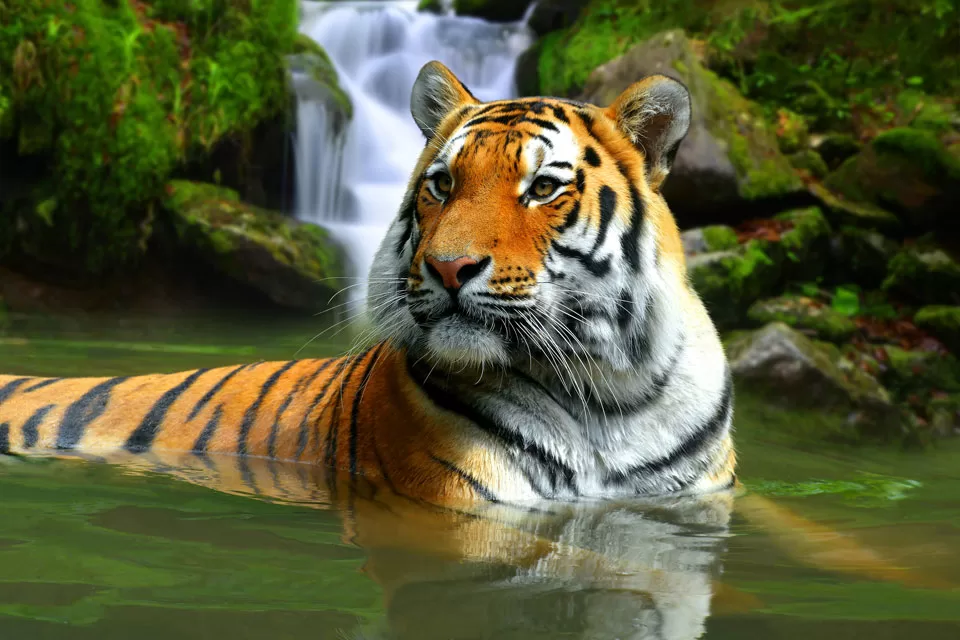
AMUR TIGER
Scientific Name: Panthera tigris altaica
Status: Endangered
Population: As many as 500
BENGAL TIGER
Scientific Name: Panthera tigris tigris
Status: Endangered
Population: 3,000-4,000
Also known as the Siberian tiger, the Amur tiger was driven to the brink of extinction in the 1940s with no more than 40 left in the wild. Bengal tigers are found mainly in India,
with smaller populations in Bangladesh, Nepal, Bhutan, China and Myanmar. Tigers are threatened by habitat loss, illegal wildlife trade, and conflict with humans.
ORANGUTANS
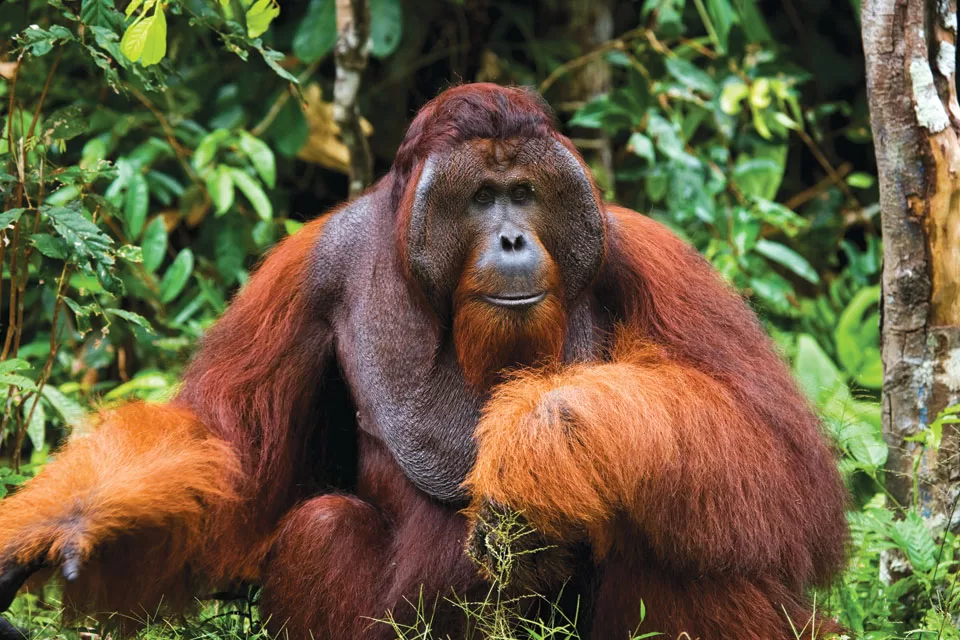
ORANGUTAN
Scientific Name: Pongo pygmaeus
Status: Critically Endangered
Population: 119,000-120,000 in the wild
SUMATRAN ORANGUTAN
Scientific Name: Pongo abelii
Status: Critically Endangered
Population: 14,000
Highly intelligent, Orangutans share 96.4% of genes with humans. Female Orangutans are hunted most, and if caught with offspring, the young are often kept as pets. Sumatran Orangutans live in the trees of tropical rainforests, and rarely travel on the ground.
BLUE WHALES
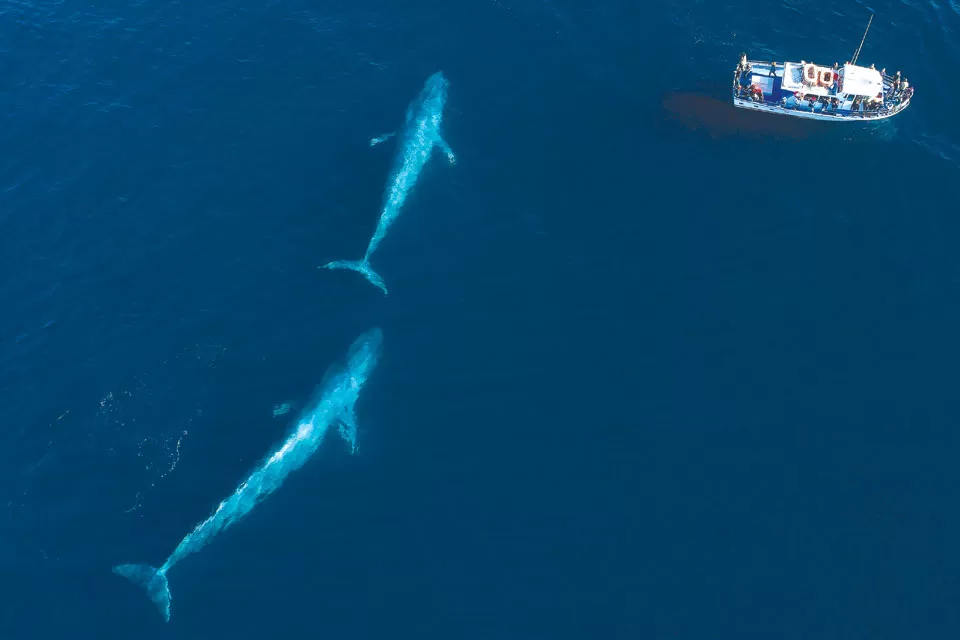
Scientific Name:
Balaenoptera musculus
Status: Endangered
Population: 10,000 – 25,000
Blue whales are harmed by ship strikes and fishing gear. Climate change has had an impact on krill, their food supply. The largest animal in the world (they can weigh up to 200 tons) blue whales are at the top of the food chain and important to the health of the marine environment.
AFRICAN WILD DOGS
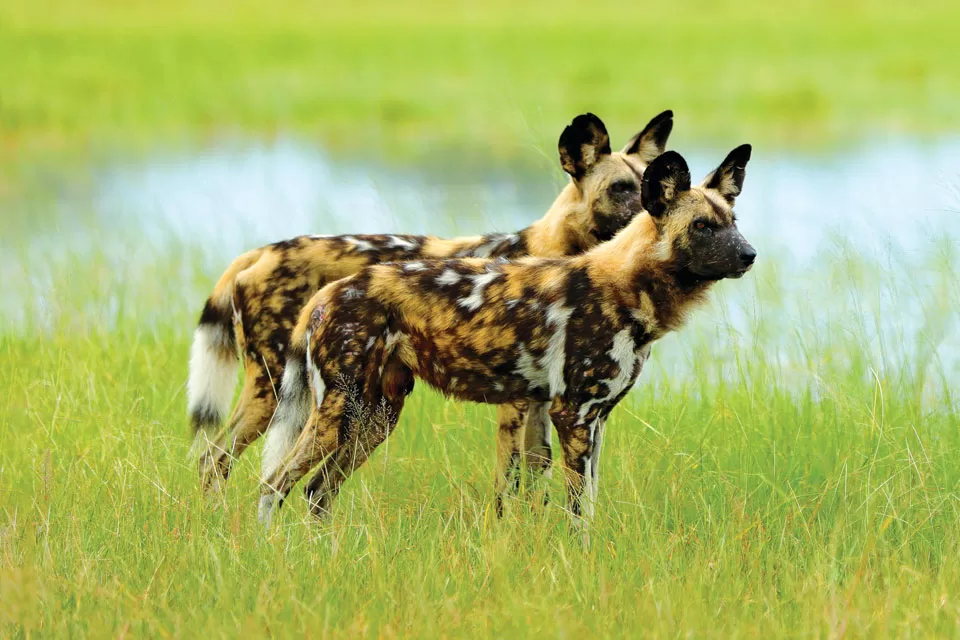
Scientific Name:
Lycaon pictus
Status: Endangered
Population: 6,600
World Wildlife Fund calls the African Wild Dog one of the world’s most endangered mammals. The largest populations are in southern Africa, Tanzania, and northern Mozambique. They are often killed by humans, accidentally and intentionally, as well as viral diseases like rabies and distemper. Habitat loss and competition with larger predators like lions are also a threat.
AMUR LEOPARD
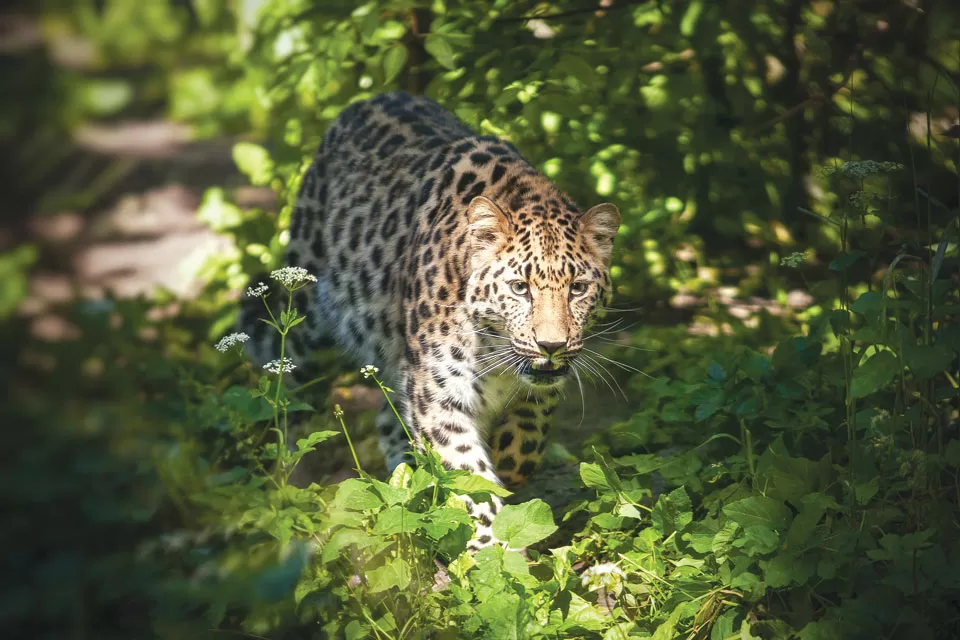
Scientific Name:
Panthera pardus orientalis
Status: Critically Endangered
Population: less than 200
A rare subspecies of leopard of the Russian Far East, the Amur leopard can run at speeds
of up to 37 mph. It is frequently killed by poachers for its beautiful, spotted fur, according to WWF.
SUMATRAN TIGERS
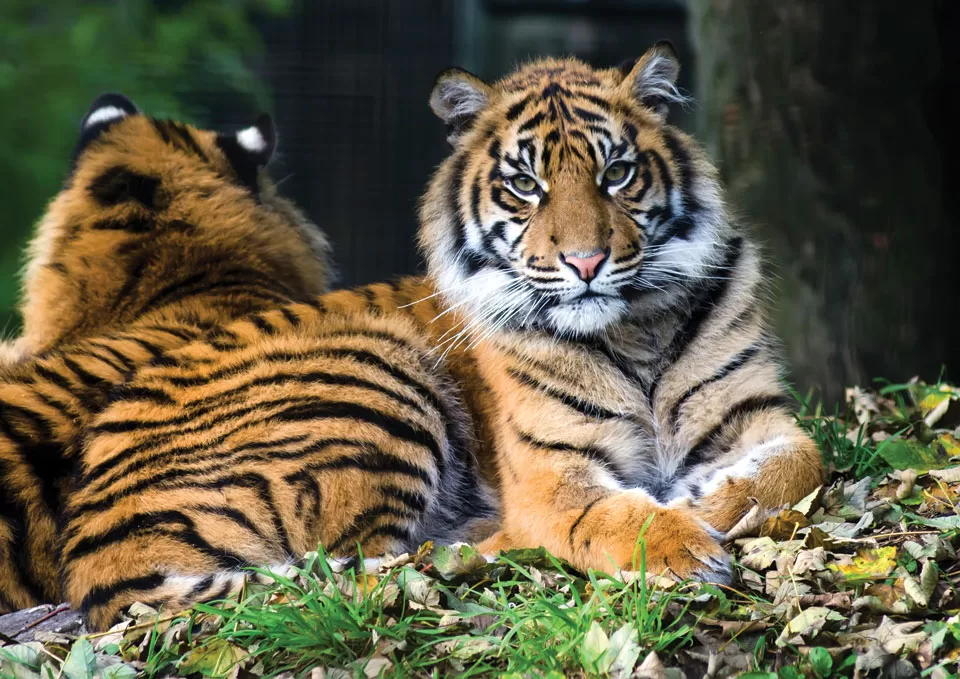
Scientific Name:
Panthera tigris sumatrae
Status: Critically Endangered
Population: 400-500
Habitat destruction from deforestation forces tigers into human-populated areas in search of food, where they are often killed by villagers. They are victims of illegal wildlife trade, prized for their bones and their pelts.
EASTERN LOWLAND GORILLA
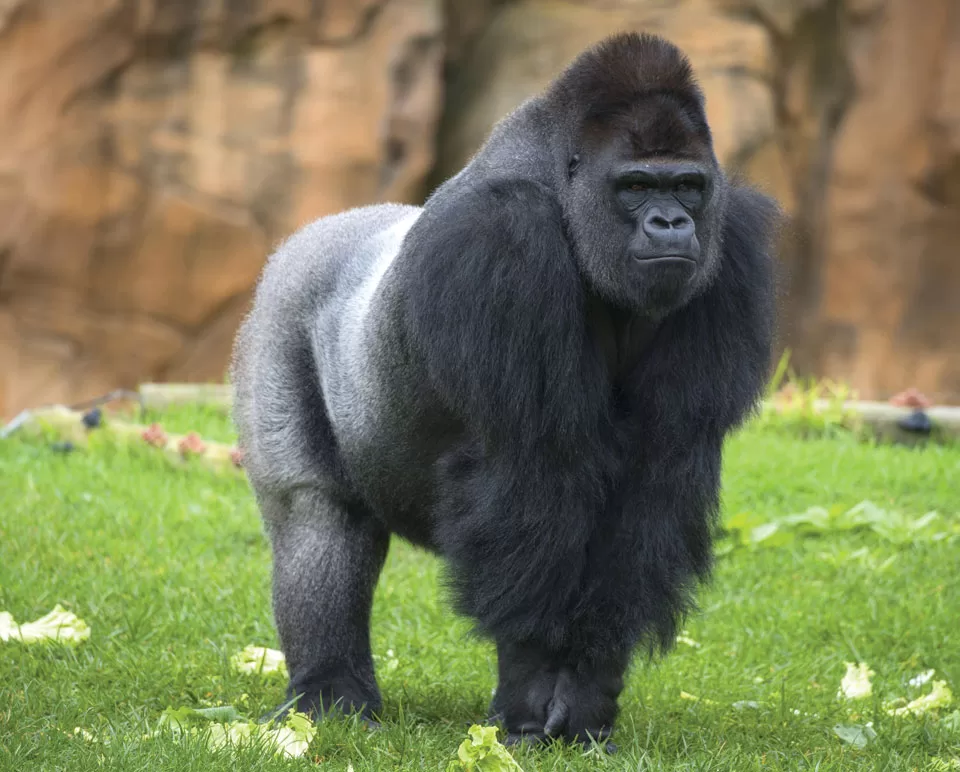
Scientific Name: Gorilla beringei graueri
Status: Critically Endangered
Population: Fewer than 7,000
Poaching, disease, habitat destruction and years of civil unrest in the Democratic Republic of Congo have impacted the population of this gorilla.
EASTERN LOWLAND GORILLA
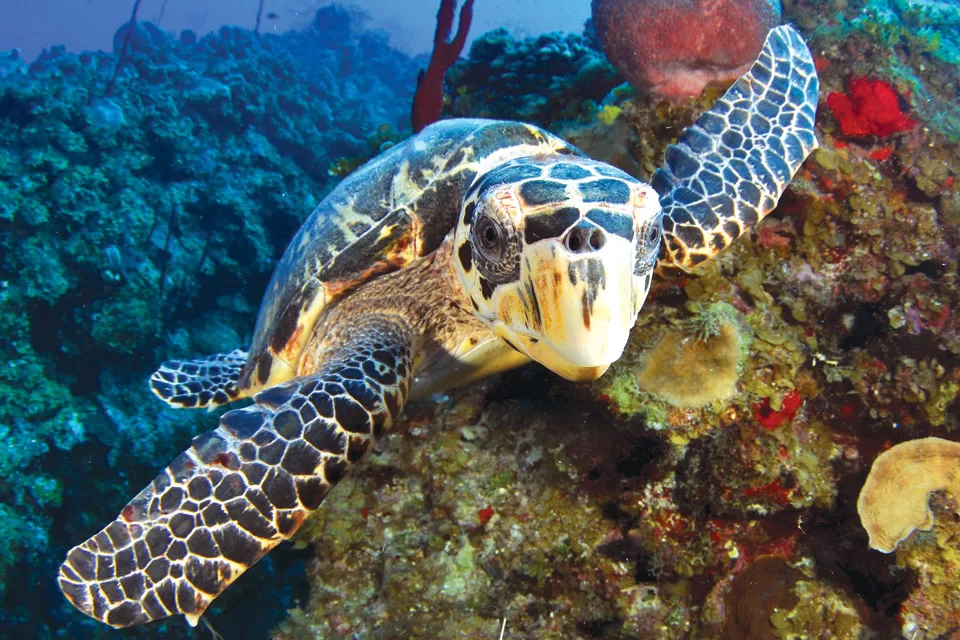
Scientific Name:
Eretmochelys imbricata
Status: Critically Endangered
Population: 57,000
Hawksbills feed in coral reefs, helping to maintain the health of reefs and sea grass beds. Their existence is threatened by wildlife trade of their shells, habitat loss, egg collection, pollution and development on coasts, where they lay their eggs. They often get caught on fishing hooks or tangled in gillnets, causing them to drown.
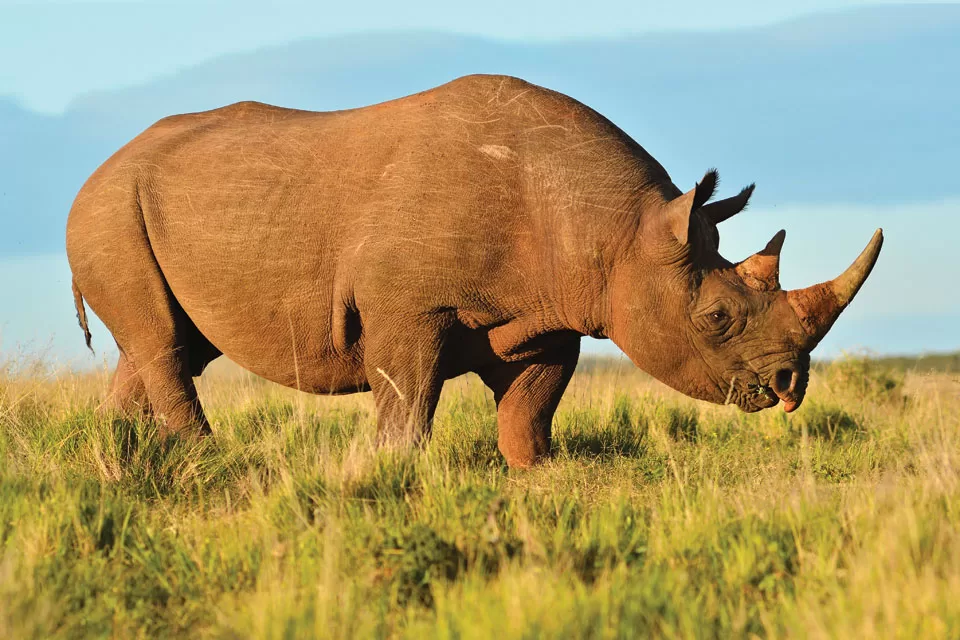
JAVAN RHINO
Scientific Name:
Rhinoceros sondaicus
Status: Critically Endangered
Population: 58-76
With so few of these rhinos that live in Ujung Kulon National Park in Java, Indonesia, these are the most threatened of all rhinos. Most were killed by trophy hunters during colonial times. Vietnam’s last Javan rhino was poached in 2010. They are killed for their horn, which is coveted in parts of Asia for its supposed medicinal qualities and as an ornament. Even in the park, poaching remains a threat.
Here Are Ways Everyone
Can Make A Difference
There are many organizations that are dedicated to preserving our wildlife and each of them has its own programs. We are highlighting some of the non-profits that we think are worthy of consideration.
World Wildlife Fund (WWF)
The WWF is probably the most well-known conservation organization and doesn’t need much of an introduction. They have been fighting for wildlife conservation for decades and their efforts have not been in vain – they have made a huge difference to our natural world both on land and in the ocean.
The WWF supports any animals that need protecting and their efforts stretch wide and far – from the freezing Antarctic to the sunny skies of Mexico or the lush bushveld of Africa. Some of the animals they help protect are:
• Tigers
• Elephants
• Orangutans
• Leopards
• Marina Turtle
• Dolphins
• Rhinos
• Gorillas
• Chimpanzees
• Whales
Visit the website to find out about the various ways to donate.
WWF has a gift center with all types of merchandise that raises funds to protect wildlife and the environment. Your donation will support WWF’s conservation work around the globe.
Items include a complete line of apparel for infants, children, and adults, as well as an accessory line that includes caps, headbands, earrings, scarves, socks and mittens. They also have an adoption program featuring the many endangered species which includes an 8” plush toy, a photograph, adoption certificate, a species card and a gift card for $55. Other adoption kits that are available online are a $25 kit and a $100 kit.
Website: www.worldwildlife.org
Panthera
Panthera is a wildlife conservation organization exclusively devoted to protecting our world’s 38 wildcat species.
Endangered anImals which they protect:
• Tigers
• Snow Leopards
• Lions
• Pumas
• Jaguars
• Cheetahs
By donating to Panthera and supporting conservation projects you help them decrease the killing of wild cats around the world.
Start your own campaign with Panthera by visiting their website. Donations to Panthera through your campaign can be made online, or you can gather pledges and submit donations via mail using the credit card and check donation form. You can also create a campaign on Crowdrise where all donations go directly to Panthera.
Website: panthera.org
The Wildlife Conservation Society (WCS)
WCS was founded in 1895 and is committed to protecting the world’s wildlife, focusing on 15 priority regions. Their activities are aimed at combining science, conservation and education.
They protect animals threatened by issues like climate change and misuse of resources. These species include:
• Big cats
• Bears
• Elephants
• Carnivores
• Apes
As WCS states, wildlife is worth fighting for and there are a range of ways in which you can get involved to help them serve their cause. There are different ways to donate through their website including Tribute Giving by honoring a friend or family member with a tribute gift to the Wildlife Conservation Society. WCS will send a personalized. tribute card to the person.
Website: empowersafrica.org
International Union For Conservation Of Nature (IUCN)
The IUCN was the world’s first global environmental organization and works towards finding solutions to pressing environmental challenges. Over 185 countries form part of the union and they have thousands of field projects around the globe.
The following are some of the animals that have benefited from their conservation efforts:
• African Elephants
• Bengal Tigers
• African Lions
• Green Sea Turtle
• Manatees
• Leopards
• Crocodiles
• Penguins
• Scalloped Hammerhead Sharks
• Atlantic Humpback Dolphins
The website will show individuals wanting to support IUCN different ways to donate.
Website: iucn.org