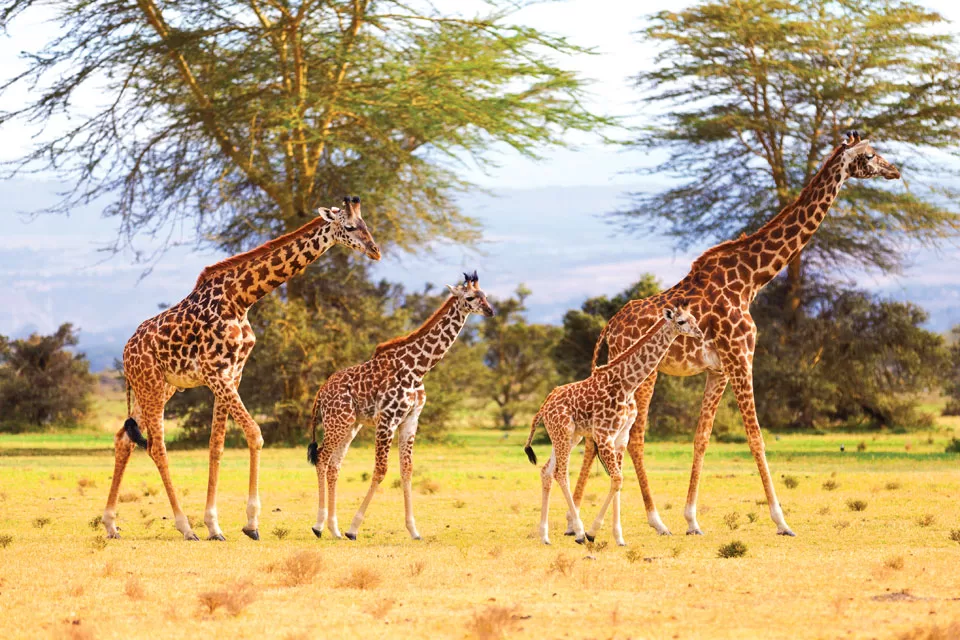
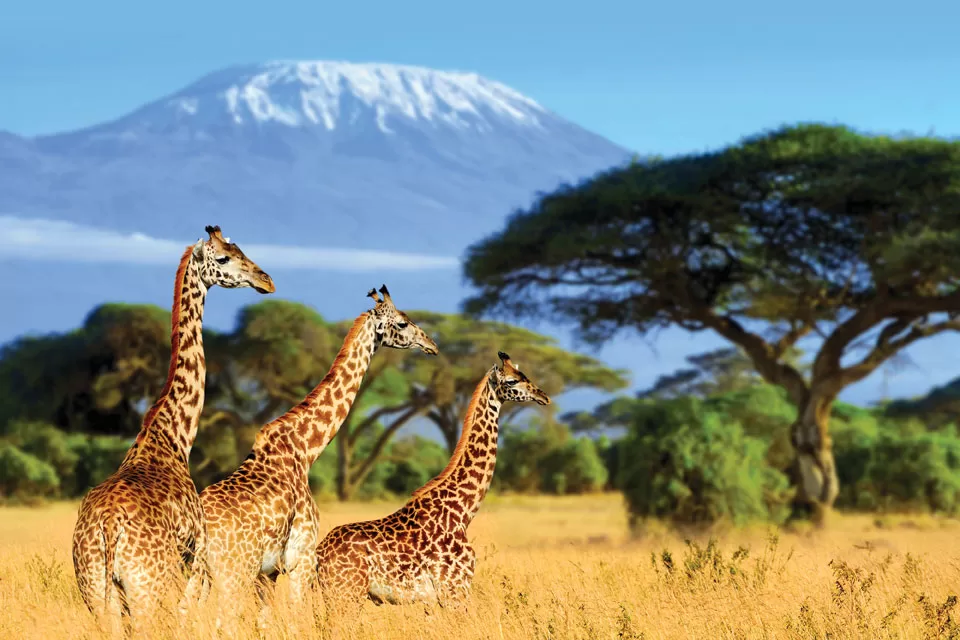
The recent Internet coverage of April the Giraffe’s pregnancy captured millions of people’s attention as they followed the video stream of her at a New York animal park. How many of these followers realize that giraffes in the wild have recently been ranked in the “Vulnerable Status” of the Endangered species list?
The International Union for the Conservation of Nature, the body that administers the world’s official endangered species list, announced in December that it was moving the giraffe to Vulnerable Status in its Red List of Threatened Species report. That means the animal faces extinction in the wild in the medium-term future if nothing is done. The next categories are endangered, critically endangered, extinct in the wild, and extinct.
It is estimated that there are only 97,000 giraffes in the wild at the last count, which represents a decline of 40 per cent over the last three decades. The giraffe is the world’s tallest animal. Female giraffes are on average about 15 feet tall and male giraffes range from 16 feet to 20 feet tall. Their legs alone are about 6 feet long. Females weigh up to 1500 pounds and males weigh up to 2600 pounds. Both male and female giraffe have ‘horns’ already at birth. The giraffe calf can stand up and walk about an hour after birth. They can run as fast as 35 miles an hour over short distances, or cruise at 10 mph over longer distances. Giraffes only need 5 to 30 minutes of sleep in a 24-hour period. Giraffes bellow, snort, hiss and make flute-like sounds, as well as low pitch noises beyond the range of human hearing. A giraffe’s neck is too short to reach the ground so they awkwardly spread their front legs or kneel to reach the ground for a drink of water. Giraffes only need to drink once every few days. Most of their water comes from all the plants they eat.
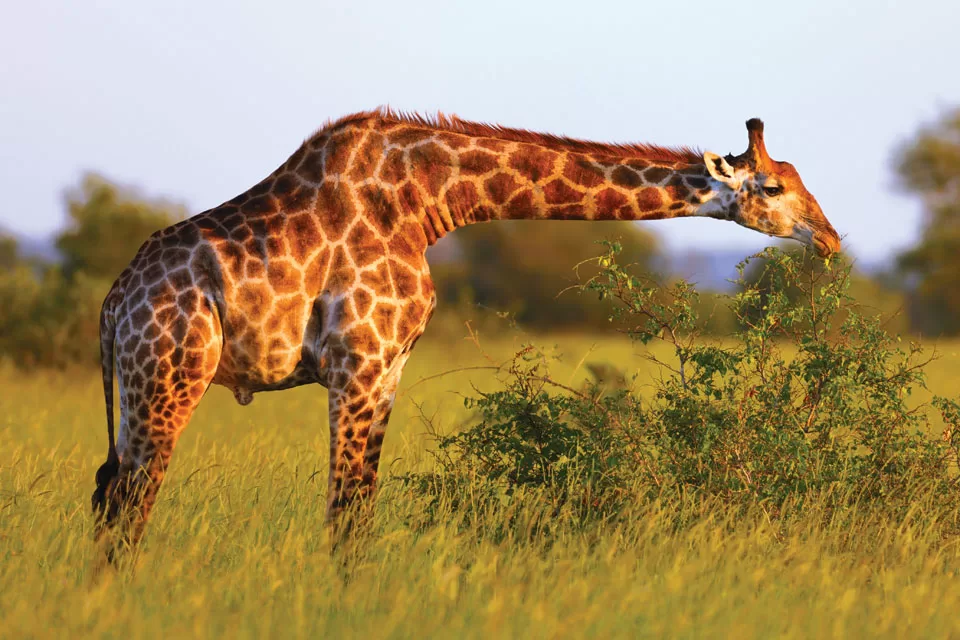
Giraffes spend most of their lives standing up. They even sleep and give birth standing up. The average gestation period is approximately 15 months. Usually a giraffe will have only one calf, although twins have been recorded. The new-born calves are about 6 foot at birth and grow very quickly during the first year. Calves are reliant on their mother’s milk for up to 9-12 months. They begin to eat leaves, which are their solid food, from about 4 months. The first few months of a giraffe’s life are the most vulnerable; predators such as lions, hyenas, wild dogs, crocodiles and leopards all see a baby giraffe as prey. About 50% of all giraffe calves do not survive their first year. Even adult male giraffes are predated by lions. Giraffe mothers are extremely protective and will defend their calves with a powerful kick to any other animal that comes too close. During the first few days a newborn giraffe will often be left sitting in high grass, while the mother goes off to feed, but after a few weeks the youngster is introduced to the rest of the herd. Nursery groups, where one mother will keep watch while the others have a chance to go and find food, have been observed in the wild. Male calves will leave their mothers around 15 months and often join all-male groups. The female calves often stay in the same herd as their mothers, or if they do leave around 18 months they will often stay in the same area as the family herd they grew up in. It is unknown how long a giraffe will live but research indicates that both male giraffes, which are referred to as bulls, and female giraffes, known as cows, can live to about 25 years in the wild and even longer in captivity. The giraffes face two main threats, encroachment from cities and towns into their habitat and poaching. Some villagers kill the animals for their meat, but National Geographic reports many giraffes are slaughtered just for their tails. The giraffe tails are considered a status symbol and have been used as a dowry when asking a bride’s father for his daughter’s hand in marriage in some cultures.
Giraffes are already extinct in at least seven countries in Africa. June 21 is “World Giraffe Day” which was started by the Giraffe Conservation Foundation. The day was selected to celebrate the longest-necked animal in the world on the longest day or night of the year. There are many ways you can contribute to Giraffe conservation through this foundation, Worldwide Life Organization, and others including the African Animal Foundation. You can make a donation, join their membership programs, adopt a giraffe, and purchase a giraffe gift for both adults and children, all available online.