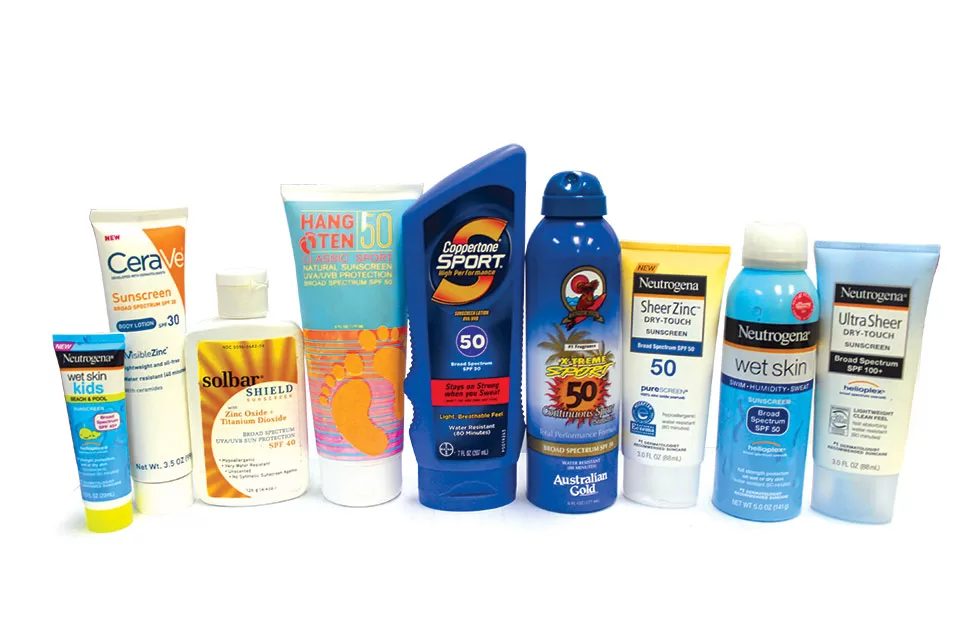

Summer is here and most of us spend time outdoors at the pool and at the beach. It is important to use sunscreen to avoid skin damage that can ultimately lead to aging skin and even skin cancer.
Sunscreens help prevent the sun’s ultraviolet (UV) radiation from reaching the skin. Two types of ultraviolet radiation, UVA and UVB, damage the skin, age it prematurely, and increase your risk of skin cancer. UVB is the chief culprit behind sunburn, while UVA rays penetrate the skin more deeply and are a cause of skin cancer on their own. Sunscreens vary in their ability to protect against UVA and UVB.Most sunscreens with an SPF of 15 or higher do a good job of protecting against UVA. It is recommended that 1 ounce should be used per application.
Here is how sunscreen protects when you look at it in terms of percentages: SPF 15 filters out approximately 93 percent of all incoming UVB rays, SPF 30 keeps out 97 percent, and SPF 50 keeps out 98 percent. While the difference seems small, if you have a history of skin cancer or have fair skin the percentages will make a difference.
There are a lot of myths about sunscreen and they are simply not true. The two most common ones are: Eighty percent of your sun exposure comes as a child and it is too late as an adult to do anything now; and if it’s cloudy outside you don’t need sunscreen, which is not true because forty percent of the sun’s ultraviolet radiation reaches the earth on a cloudy day. Most often we settle in our lounge chairs and then either spray or apply our sunscreen.
What you may not realize is that sunscreens should be applied 30 minutes before sun exposure to allow the ingredients to be absorbed into the skin. It is surprising how many people don’t realize how important it is to apply your sunscreen prior to sun exposure. Reapplying sunscreen is just as important as putting it on in the first place. Dermatologists recommend that you apply the same amount every two hours. Sunscreens should also be reapplied immediately after swimming, toweling off, or if you are perspiring a great deal.
When selecting a sunscreen you should consider one with Zinc. Zinc works by forming a protective physical barrier over the skin to block the sun’s rays working as a natural reflective shield. This powerful mineral provides broad spectrum protection, which in turn reduces UV damage.
It is recommended to buy a high-quality product with SPF of 15 or higher that contains broad spectrum. Look for The Skin Cancer Foundation’s Seal of Recommendation which guarantees that a sunscreen meets the highest standards for effectiveness.
In addition to sunscreen, there is Sun Protective Clothing that also blocks the harmful UVB rays on your body.