
Interesting facts about the individuals who inspired the creation of these holidays.
– MOTHER’S DAY –
Ann Maria Reeves Jarvis

Ann Maria Reeves Jarvis was a social activist and community organizer during the American Civil War era. In 1850, Ann Reeves married Granville Jarvis, the son of a Baptist minister, who became a successful merchant. The Jarvis family, like many families during the mid-1800s, experienced frequent tragedy and loss. Jarvis bore between eleven and thirteen children over the course of seventeen years. Of these children, only four survived to adulthood. The others died of diseases such as the measles, typhoid fever, and diphtheria epidemics. These losses inspired Jarvis to take action to help her community combat childhood diseases and unsanitary conditions.
In 1868, Ann Maria Reeves Jarvis, mother of Anna Marie Jarvis, created a committee to establish a “Mother’s Friendship Day”, the purpose of which was “to reunite families that had been divided during the Civil War.” Jarvis wanted to expand this into an annual memorial for mothers, but she died in 1905 before the celebration became popular. Her daughter would continue her mother’s efforts.
Ann Maria is recognized as the mother who inspired Mother’s Day and as a founder of Mother’s Day movements, and her daughter, Anna Marie Jarvis (1864–1948), is recognized as the founder of the Mother’s Day holiday in the United States.
Anna Jarvis also embarked on a mission to make Mother’s Day an officially recognized holiday in the United States. She succeeded when, in 1914, President Woodrow Wilson signed a congressional resolution officially making the second Sunday in May the national Mother’s Day and calling for Americans to recognize it by displaying the flag.
– FATHER’S DAY –
Sonora Louise Smart

Sonora Louise Smart was 16 when her mother died in childbirth with her sixth child. Sonora was the only daughter and shared with her father William in the raising of her younger brothers, including her new infant brother Marshall.
Smart held her father in great esteem. While hearing a church sermon about the newly recognized Mother’s Day at Central Methodist Episcopal Church, Sonora felt strongly that fatherhood needed recognition as well. She approached the Spokane Ministerial Alliance and suggested her own father’s birthday of June 5 as the day of honor for fathers. The Alliance chose the third Sunday in June instead.
In 1910, a Father’s Day celebration was held in Spokane, Washington, at the YMCA by Sonora Smart Dodd, who was born in Arkansas. Its first celebration was in the Spokane YMCA on June 19, 1910. Her father, the civil war veteran William Jackson Smart, was a single parent who raised his six children there. Several local clergymen accepted the idea, and on June 19, 1910, the first Father’s Day, “sermons honoring fathers were presented throughout the city”.
Although observance of the holiday faded in the 1920s, over time the idea of Father’s Day became popular and embraced across the nation. In 1966, President Lyndon B. Johnson signed a presidential proclamation declaring the third Sunday of June as Father’s Day. In 1972, President Nixon established a permanent national observance of Father’s Day to be held on the 3rd Sunday of June each year. Dodd was honored at Expo ‘74, the World’s Fair, in Spokane in 1974.
– FLAG DAY –
Bernard J. Cigrand
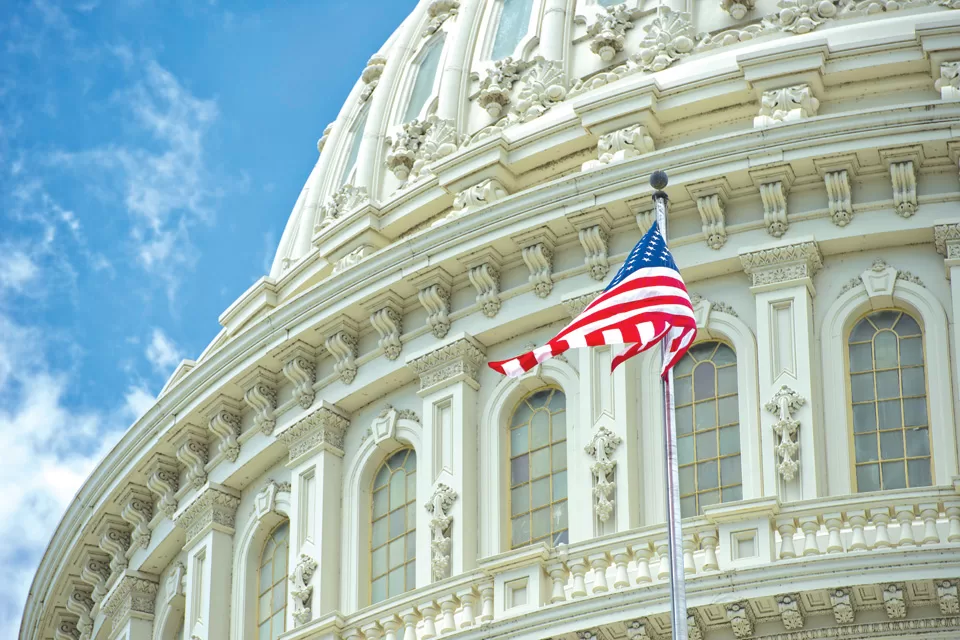
The Fourth of July was traditionally celebrated as America’s birthday, but the idea of an annual day specifically celebrating the Flag is believed to have first originated in 1885. Flag Day was the brainchild of Bernard J. Cigrand, the youngest of six children of Nicholas and Susan Cigrand who had settled and married here a decade earlier after immigrating to this country from Luxembourg in Northwestern Europe.
Cigrand, a school teacher, arranged for the pupils in the Fredonia, Wisconsin Public School to observe June 14, which was the 108th anniversary of the official adoption of The Stars and Stripes, as ‘Flag Birthday’. In numerous magazines and newspaper articles, and public addresses over the following years, Cigrand continued to enthusiastically advocate the observance of June 14 as ‘Flag Birthday’, or ‘Flag Day’.
He was one of the contributing editors of the Encyclopedia Americana. One of his items was “The Recognition and Meaning of Flag Day”. He wrote a widely distributed pamphlet on “Laws and Customs regulating the use of the Flag of the United States.”
Some of the books he wrote are: “Story of the American Flag”; “The Real Abraham Lincoln”; “The Life of Alexander Hamilton”; “Story of the Great Seal of the United States”; “History of American Emblems”; a “The History of American Heraldry”; and “The Real Robert Morris, the financier of the American Revolution.”